
The bug in your bathroom has a name
How Bokuju turns a photo of a spider into a field guide entry, why scientific names matter, and what happens when taxonomy gets complicated by domestic breeds.
Bugs are probably the most snapped category in Bokuju. I think that makes sense. You're in your bathroom, there's a long-legged spider doing nothing threatening in the corner, and your first instinct is to photograph it. Good call.
That spider is almost certainly a cellar spider. Harmless, found worldwide, and quietly doing pest control in your home by hunting and eating other spiders including black widows. The thing you thought was a nuisance is one of the more useful creatures sharing your house.
Bokuju will tell you all of that.
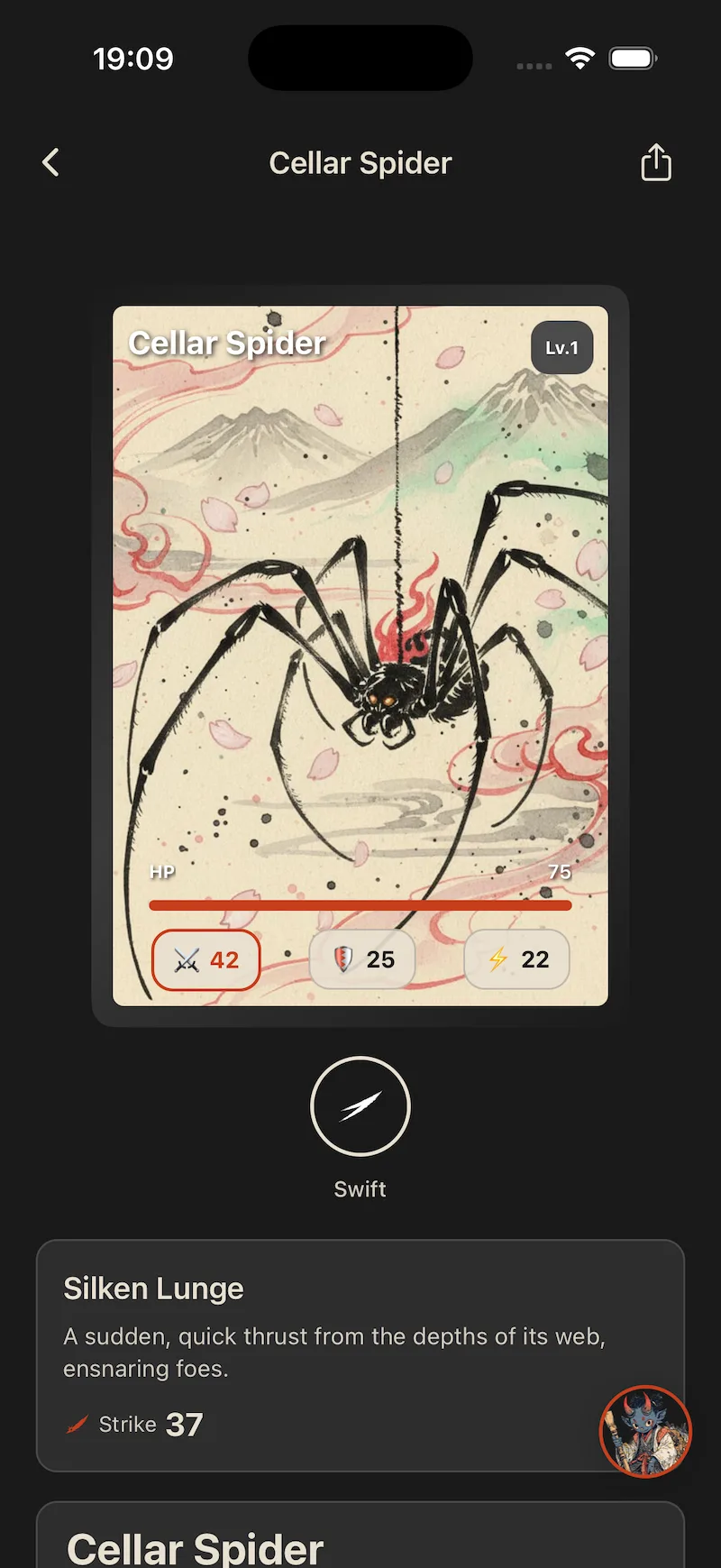
The Bokupedia
Every creature you identify gets added to your Bokupedia, which is the closest thing Bokuju has to a real Pokedex. Not a card collection, not a gallery -- a proper field guide of everything you've personally encountered, with entries for everything else living in your region that you haven't found yet.
Those blank entries matter. If someone near you has caught a cellar spider but you haven't, your Bokupedia shows a silhouette where your card should be. You know it's out there. You start noticing the corners of rooms differently.
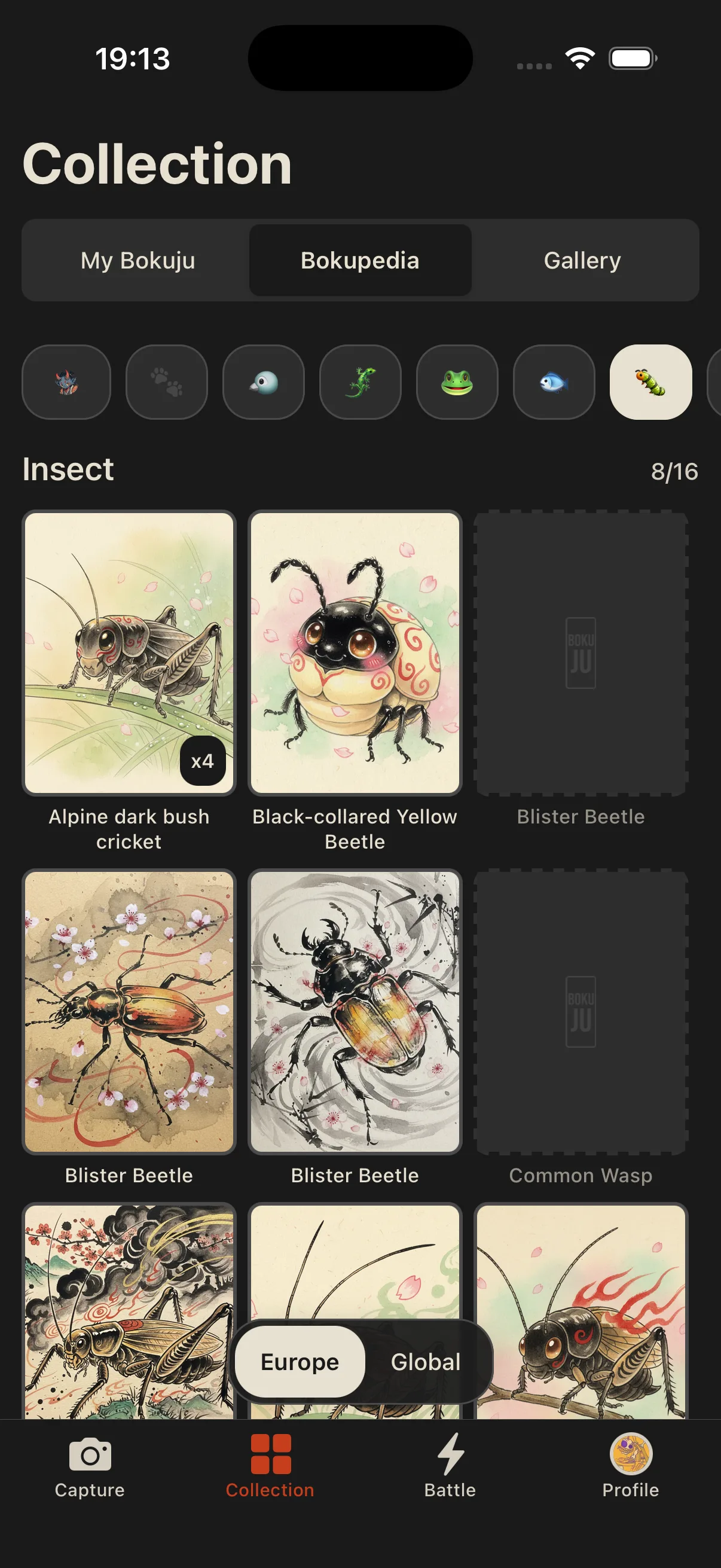
You can toggle between your region and global, so if you're curious what's been caught across Europe or worldwide for a given species, that's there too. Each entry aggregates all the cards caught for that species rather than showing one generic illustration.
Why scientific names
The Bokupedia groups creatures by scientific name rather than common name, and this is worth explaining because it's not an arbitrary choice.
Common names are a mess. A cellar spider might also be called a daddy longlegs, a vibrating spider, or a skull spider depending on where you are. If Bokuju grouped by common name you'd end up with three separate Bokupedia entries for the same animal, none of them complete.
Scientific names are the stable version. Pholcus phalangioides is Pholcus phalangioides everywhere. The Bokupedia can group every cellar spider card under one entry regardless of what anyone calls them locally, and the data stays clean.
Insects work particularly well for this. A cellar spider is a cellar spider. A Mexican redknee tarantula (Brachypelma hamorii) is one of the more visually distinct spiders on the planet and the scientific classification maps cleanly onto what you actually caught.
Where it gets complicated
Domestic animals are a different problem. All dogs share the same scientific name: Canis lupus familiaris. If Bokuju grouped purely by that, every dog card -- Husky, Border Collie, Chow Chow -- would stack under one generic entry with one set of information. The Husky card would show you facts about dogs in general rather than anything specific to Huskies.
The fix is that the Bokupedia still uses scientific name as the spine for grouping, but each card pulls from breed-level data rather than species-level data. Your Husky card reads like a Husky card. The Bokupedia knows they're all Canis lupus familiaris for organisational purposes, but what you actually see is specific.
Insects don't have this problem. The taxonomy is clean at the species level and that's mostly what you're working with when you're snapping things in the wild.
What each entry actually shows you
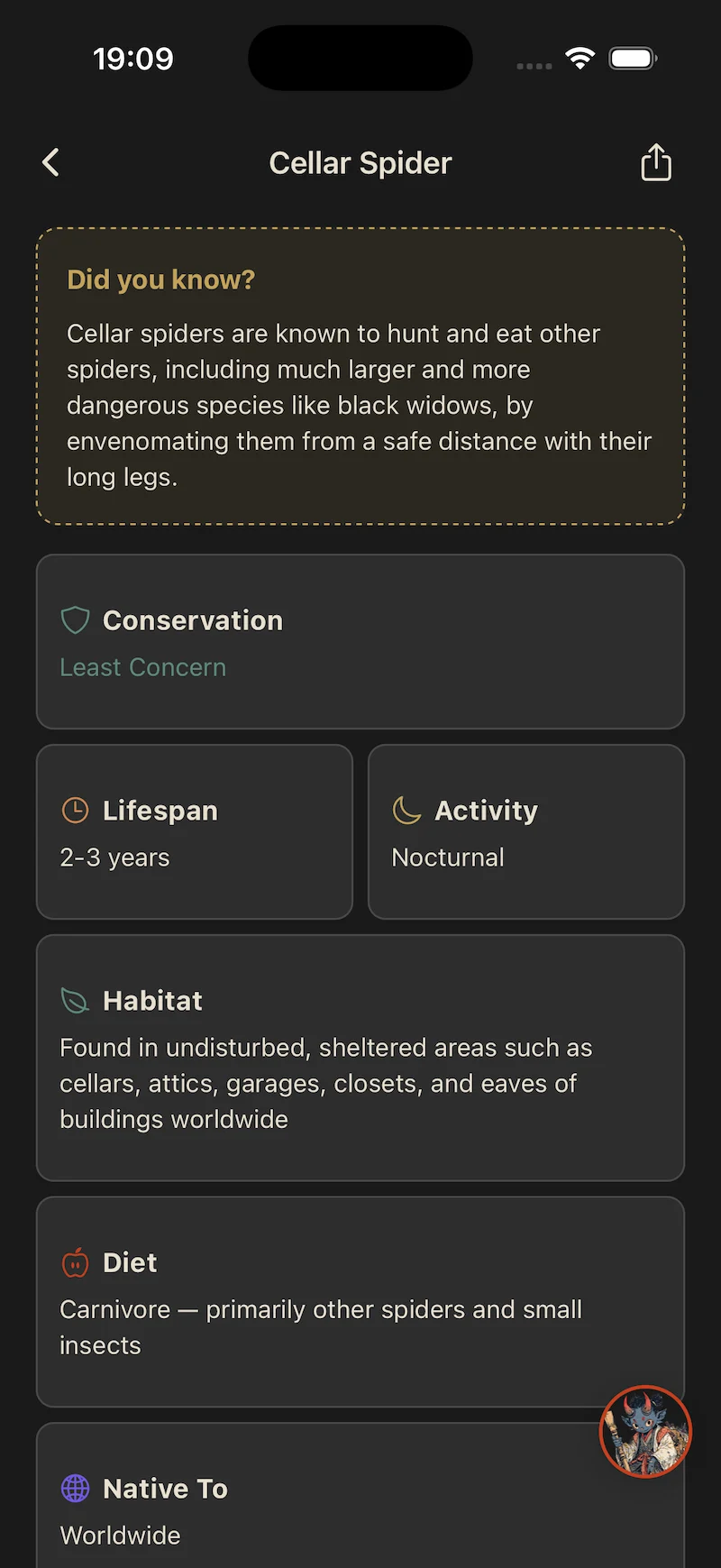
This is something I added recently and I think it meaningfully changes how the Bokupedia feels. Each species entry now includes conservation status, lifespan, activity pattern, habitat, diet, and native range alongside the usual card info.
The cellar spider: Least Concern, 2-3 year lifespan, nocturnal, found worldwide in sheltered spots, carnivore. The Mexican redknee tarantula: Near Threatened, females live 20-30 years (males 5-10), nocturnal, semi-arid scrublands and deserts of Mexico.
The lifespan difference between those two spiders is wild. I did not know tarantulas could live that long before building this.
That's what I wanted the card to actually be -- not just a collectible, but something that makes you slightly more knowledgeable about the natural world because you happened to photograph a spider in your bathroom. The Bokupedia just shows you what you've got and what you're missing. The card is where you actually learn something.
Bokuju is live and totally free to play around with for your first five creatures. I'd be stoked if you gave it a go.